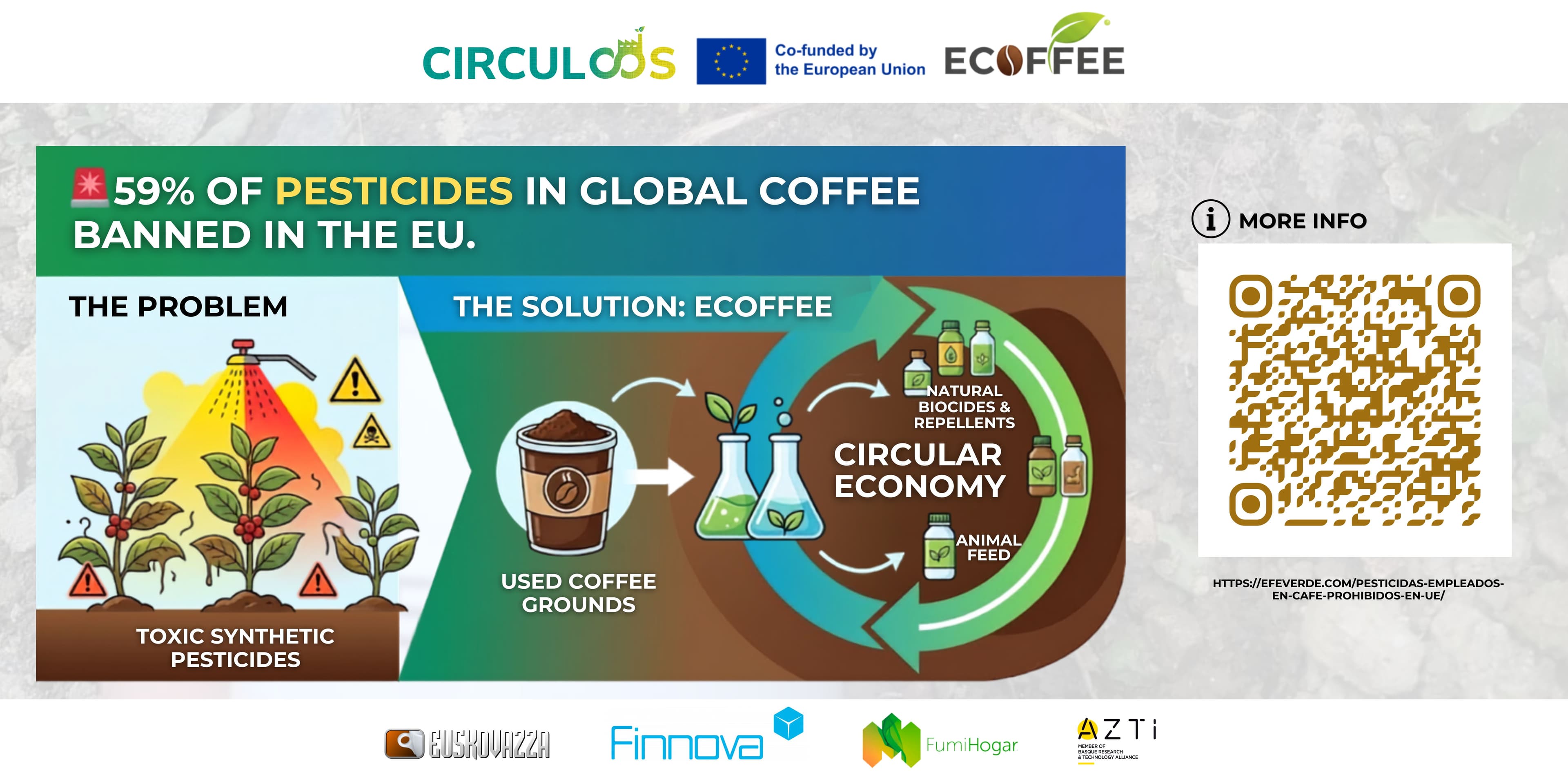
A report by Coffee Watch, Inkota, Deutsche Umwelthilfe, and the Pesticide Action Network warns of the high toxicity of chemicals used in global coffee cultivation, which threaten human health and ecosystems
Funded by Horizon Europe through CIRCULOOS, the ECOFFEE consortium transforms HORECA waste into 100% natural agricultural alternatives (biocides and larvicides)
BRUSSELS, July 22, 2026. The reliance on highly toxic chemicals in global agriculture has reached a critical turning point. As reported by EFE Verde following recent international research, 59% of the pesticides currently used in global coffee production are banned in the European Union due to their severe impact on biodiversity, soil and water quality, and human health. Faced with this global environmental threat, European innovation provides real solutions through the circular economy: the ECOFFEE project.
Funded by the European Commission's Horizon Europe programme (under the CIRCULOOS project framework), ECOFFEE was launched with the mission of offering sustainable alternatives to these synthetic chemicals by developing 100% natural biocides, repellents, and larvicides. The raw material to achieve this? The very waste generated by daily coffee consumption in the HORECA (hotels, restaurants, and cafes) sector and vending machines.
Through an innovative reverse logistics and digital traceability model, the consortium recovers tons of spent coffee grounds to extract and utilise their bioactive compounds, using their natural antimicrobial properties as a shield against agricultural pests.
An expert consortium leading the transition
The project is driven by a multidisciplinary team that brings together science, industry, and European policy. Led by the technology centre AZTI (coordinator of scientific validation), it counts on the strategic logistics of Euskovazza, the development and formulation of sustainable biocides by the specialized SME FumiHogar, and the expertise in scalability, knowledge transfer, and communication of the Finnova Foundation.
"The fact that 59% of these pesticides are banned reminds us that the transition to toxic-free agriculture is not an option, but a vital urgency. With ECOFFEE, we demonstrate that the problem contains the seed of the solution: we manage to transform a massive urban waste into a high-value strategic agricultural resource," highlight the consortium partners.
In addition to biopesticides, ECOFFEE is validating the use of these coffee by-products as high-quality nutritional ingredients for animal feed. This approach reduces CO2 emissions associated with traditional waste management by 30% and prevents thousands of tons of grounds from ending up in landfills.
The initiative demonstrates that digitalization and the circular bioeconomy are the most effective tools to protect our planet and ensure a safe and sustainable food supply chain.
About ECOFFEE
ECOFFEE is a pilot project funded by the European Union under the Horizon Europe programme (Grant Agreement N° 101092295 through the CIRCULOOS project). Its objective is to give a second life to coffee waste, transforming it into sustainable, high-value-added products through a collaborative circular economy approach and the use of digital traceability platforms (RAMP and GRETA).
Press Contact:
Website: https://ecoffeeproject.eu/
Social Media: @ECOFFEE_EU (X / Instagram) | ECOFFEE_EU (LinkedIn)